

Differentiating Common Itchy Rashes in Children
Parents often struggle to differentiate between various rashes that cause intense scratching. A misdiagnosis can be disastrous—for instance, applying a steroid cream (used for eczema) to a scabies infestation will dramatically suppress the local immune response and cause the mites to multiply uncontrollably, a condition known as "Norwegian Scabies".
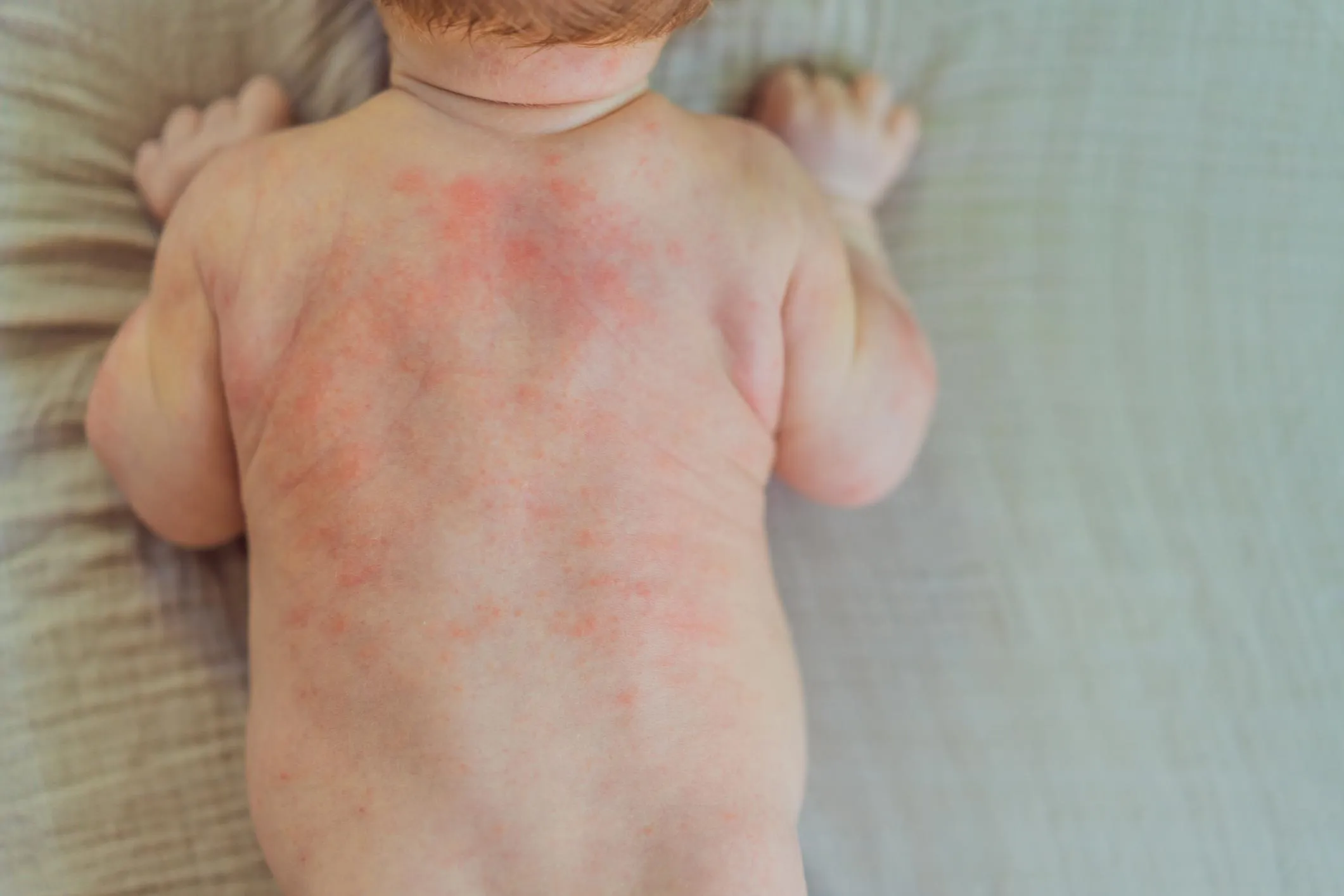
Safe, clinical pediatric evaluations ensure accurate diagnosis without risking your child's health.
        flowchart TD
            A["Child has Intense Itch"] --> B{"When is it worst?"}
            B -- "At Night" --> C["Check Web spaces, Wrists, Armpits"]
            C -- "Pimple-like burrows" --> D["Likely Scabies
(Contagious Mite)"]

            B -- "Constant" --> E{"Where is it located?"}
            E -- "Elbow/Knee Creases" --> F["Likely Atopic Dermatitis
(Eczema)"]
            E -- "Scalp Only" --> G["Likely Pediculosis
(Head Lice)"]

            style D fill:#fed7d7,stroke:#e53e3e,stroke-width:2px
            style F fill:#fefcbf,stroke:#d69e2e,stroke-width:2px
            style G fill:#e2e8f0,stroke:#4a5568,stroke-width:2px
- Atopic Dermatitis (Eczema): A chronic genetic condition caused by a filaggrin protein deficiency. The skin fails to retain moisture, leading to extremely dry, red, scaling patches. It is not contagious but causes severe sleep-disturbing itch and makes the child prone to bacterial infections.
- Scabies: A highly contagious infestation by the Sarcoptes scabiei mite which burrows under the skin to lay eggs. It presents as intensely itchy, pimple-like rashes, often dramatically worse at night. It rapidly spreads through households, requiring simultaneous treatment of the entire family.
- Pediculosis Capitis (Head Lice): An infestation of the scalp. The severe itching leads to excoriation (scratch marks), which frequently progress to secondary bacterial infections like impetigo (pus-filled crusts) if left untreated.
Advanced Treatment Options
At our clinic in Greater Noida, we offer several evidence-based solutions:
| Condition | Clinical Intervention | Why Avoid Home Remedies? |
|---|---|---|
| Scabies | Weight-adjusted topical scabicides (Permethrin) and oral Ivermectin (for older children). Strict fomite washing protocol. | Neem oil or sulfur pastes are clinically ineffective and severely irritate a child's skin, causing contact dermatitis. |
| Atopic Dermatitis | Ceramide-dominant barrier repair creams, low-potency TCS, and calcineurin inhibitors for sensitive areas (face/neck). | Coconut or mustard oil alone lacks ceramides and does not repair the compromised lipid barrier. |
| Head Lice | Prescription pediculicides (Dimethicone or specialized lotions) that mechanically suffocate lice without neurotoxins. | Kerosene or essential oils cause severe chemical burns on the scalp and risk systemic toxicity. |

Dr. Manali's Advice
Never use over-the-counter "ringworm" or combination steroid creams (Quadriderm, Panderm, etc.) on your child's rash without a diagnosis. These creams thin the skin irreversibly (striae) and alter the appearance of infections (Tinea Incognito), making them incredibly difficult to cure. Always seek a pediatric dermatology consultation for any persistent rash.