

The Science Behind Premature Skin Aging
Unlike natural (chronological) aging which happens gradually, photoaging is driven entirely by chronic exposure to the sun's ultraviolet (UV) radiation. The UVA/UVB skin impact goes far deeper than a superficial tan or a sunburn.
UVA vs. UVB: Understanding the Impact
Both UVA and UVB rays contribute to photoaging, but they do so in different ways:
- UVA Rays (Aging): These rays penetrate deep into the dermis layer. They break down collagen and elastin—the structural proteins of your skin—leading to sagging, deep wrinkles, and loss of firmness.
- UVB Rays (Burning): These affect the skin's surface epidermis, causing sunburns and direct DNA damage, which is heavily linked to skin cancer and superficial sun spots.
When the skin is exposed to these rays over time, it responds by producing metalloproteinases (enzymes that rebuild sun-damaged collagen). Unfortunately, this process isn't always perfect, leading to disorganized collagen fibers (solar elastosis). This is the fundamental science behind premature skin aging.
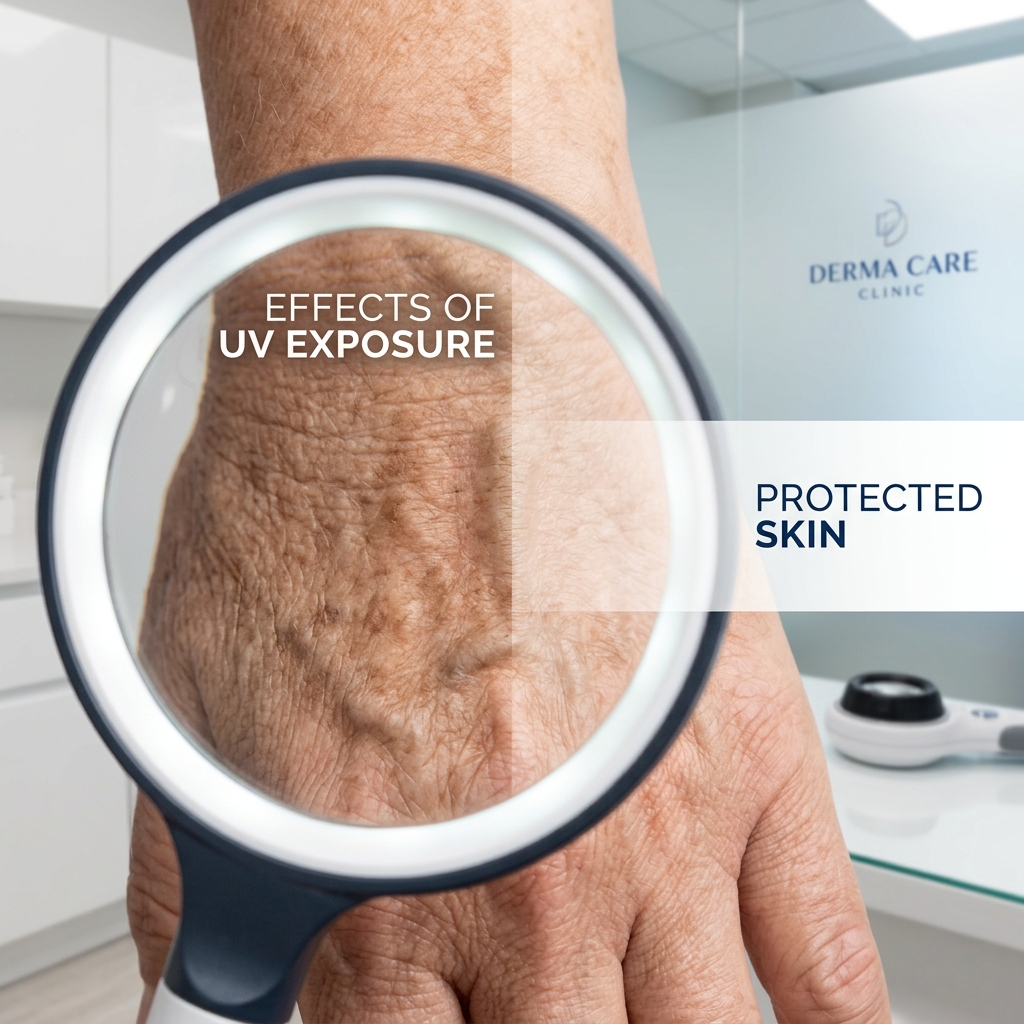
Myths vs. Facts: Sun Damage
- Myth: You don't need sunscreen on cloudy days.
Fact: Up to 80% of UVA rays penetrate through clouds. UV protection is a daily necessity. - Myth: A base tan protects you from sun damage.
Fact: A tan is a sign of skin injury and DNA damage, not protection. - Myth: Photoaging only happens in your 40s or 50s.
Fact: The cumulative effects of sun exposure start in childhood, and signs of photoaging can appear as early as your 20s.
How to Delay Sun Damage
Preventing photoaging requires a proactive approach. If you're wondering how to delay sun damage, consider these golden rules:
- Daily Broad-Spectrum Sunscreen: Apply at least SPF 30 every morning, regardless of the season. Reapply every two hours when outdoors.
- Antioxidants: Serums rich in Vitamin C and E can neutralize free radicals caused by UV exposure, halting the degradation of collagen.
- Protective Clothing: Wide-brimmed hats and UPF-rated clothing offer excellent physical barriers against UV radiation.
Advanced Treatment Options
If you're already seeing signs of sun damage, our photoaging treatment in Greater Noida provides excellent restorative options within modern anti-aging dermatology.
| Treatment Modality | How It Works for Photoaging | Expected Results |
|---|---|---|
| Topical Retinoids | Stimulates cellular turnover and promotes new collagen synthesis. | Reduction in fine lines, smoother texture, and faded sun spots. |
| Chemical Peels | Exfoliates damaged epidermal layers to reveal fresh, undamaged skin beneath. | Improved skin tone, decreased hyperpigmentation, and enhanced radiance. |
| Microneedling (Nanopore) | Induces controlled micro-injuries to boost natural collagen and elastin production. | Firmer skin, reduced deeper wrinkles, and significant overall rejuvenation. |
| Q-Switched Lasers | Targets melanin clusters specifically, breaking them down for the body to naturally clear. | Highly effective removal of solar lentigines (age spots/sun spots). |

Dr. Manali's Advice
I always tell my patients that the best anti-aging product on the market isn't a luxury cream—it's your daily sunscreen. While we offer exceptional photoaging treatment in Greater Noida to reverse damage, prevention remains paramount. Understanding the science behind premature skin aging empowers you to make better daily choices. Protect your skin today to preserve its health and vitality for tomorrow.